[Case 01]
Last-mile delivery management for drivers, managers, and more
Supply Chain & Logistics
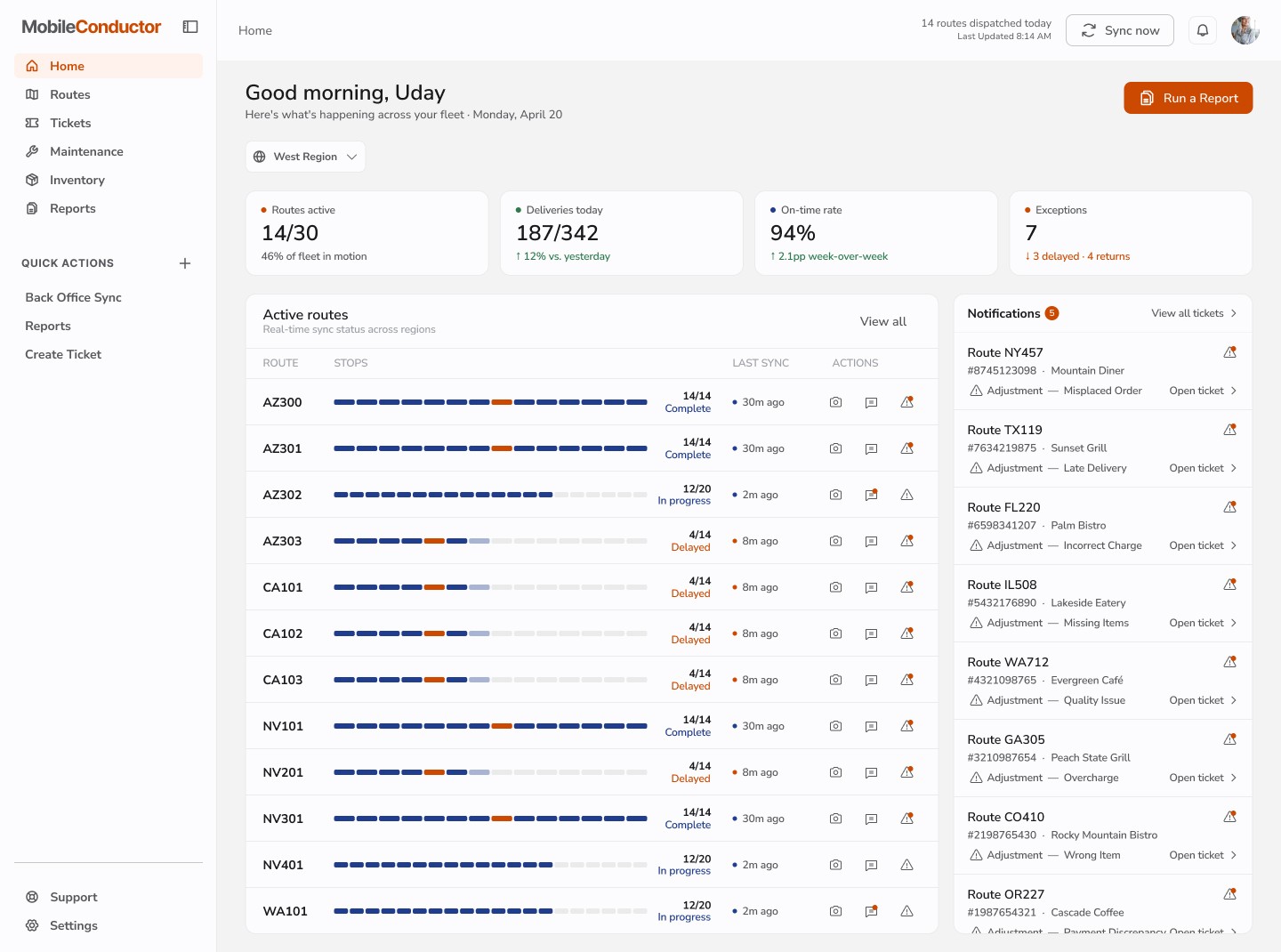
MobileConductor
Last Mile Delivery Logistics & Management
[Project Overview]
MobileConductor is a last-mile delivery management platform built for DecisionPoint Technologies. The project involved researching and auditing the existing web platform used by driver managers and other stakeholders, as well as the mobile application used by drivers in the field. Findings informed a redesign of both products, including wireframes, prototypes, a component library, a style guide, and a cohesive design system.
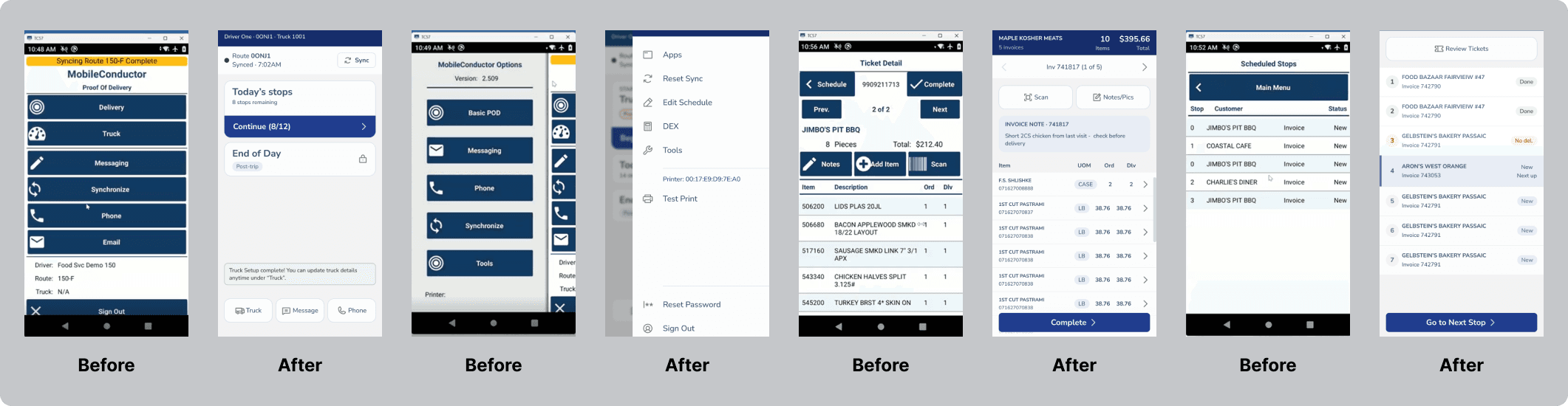
The goal was to modernize the product and improve usability by establishing a cohesive design system, improving navigation clarity, and reducing driver errors during complex multi-step delivery workflows.
[Problem Statement]
MobileConductor's existing web and mobile platforms were inconsistent, difficult to navigate, and lacked a unified design system — creating friction for drivers in the field and limiting managers' ability to monitor and respond to operations in real time. On the web platform, information was hard to surface and didn't follow intuitive or standard navigation logic. On mobile, the platform wasn't optimized for drivers' real-world conditions and offered little room to recover from mistakes without restarting entire workflows.
[Industry]
Supply Chain & Logistics
[My Role]
Project Manager, Product Designer
[Platforms]
Web & Mobile Device
[Timeline]
Sept 2025 - May 2026
[Deliverables]
High Fidelity Prototypes
Scalable Design System & Style Guide
UX Research Report
[Persona]

Jerry
[Transportation Manager]
Transportation managers work directly with drivers every morning to get routes started and monitor operations throughout the day. They're the first point of contact when drivers have issues and need to keep routes moving efficiently. They balance real-time monitoring with investigating past deliveries when customer complaints arise.
Age: 35
Location: New York, NY
Tech Proficiency: Moderate
Gender: Male
[Goal]
Ability to see driver progress and remaining stops at a glance
Quick access to proof of delivery when customers dispute deliveries & returns.
Fast resolution of delivery issues before they escalate, like if a truck breaks down and they need to send out a new truck.
[Frustrations]
Pallet photos and signatures require many clicks to access
Screen loads slowly with no progress indicator showing status
Features to improve their workflow exist but are hard to discover
[Process]
[01] UX Research
Interviewed 8 users across 2 companies, observing live workflows and system walkthroughs to surface real pain points — findings were synthesized into personas representing key roles across operations
Conducted a UX audit and heuristic analysis using Shneiderman's Eight Golden Rules of Interface Design, with findings categorized by severity across both platforms
Conducted a competitive analysis of 6 direct (Bringg, Onfleet, Circuits for Team, Detrack) & indirect (Amazon Flex, Instacart) competitors
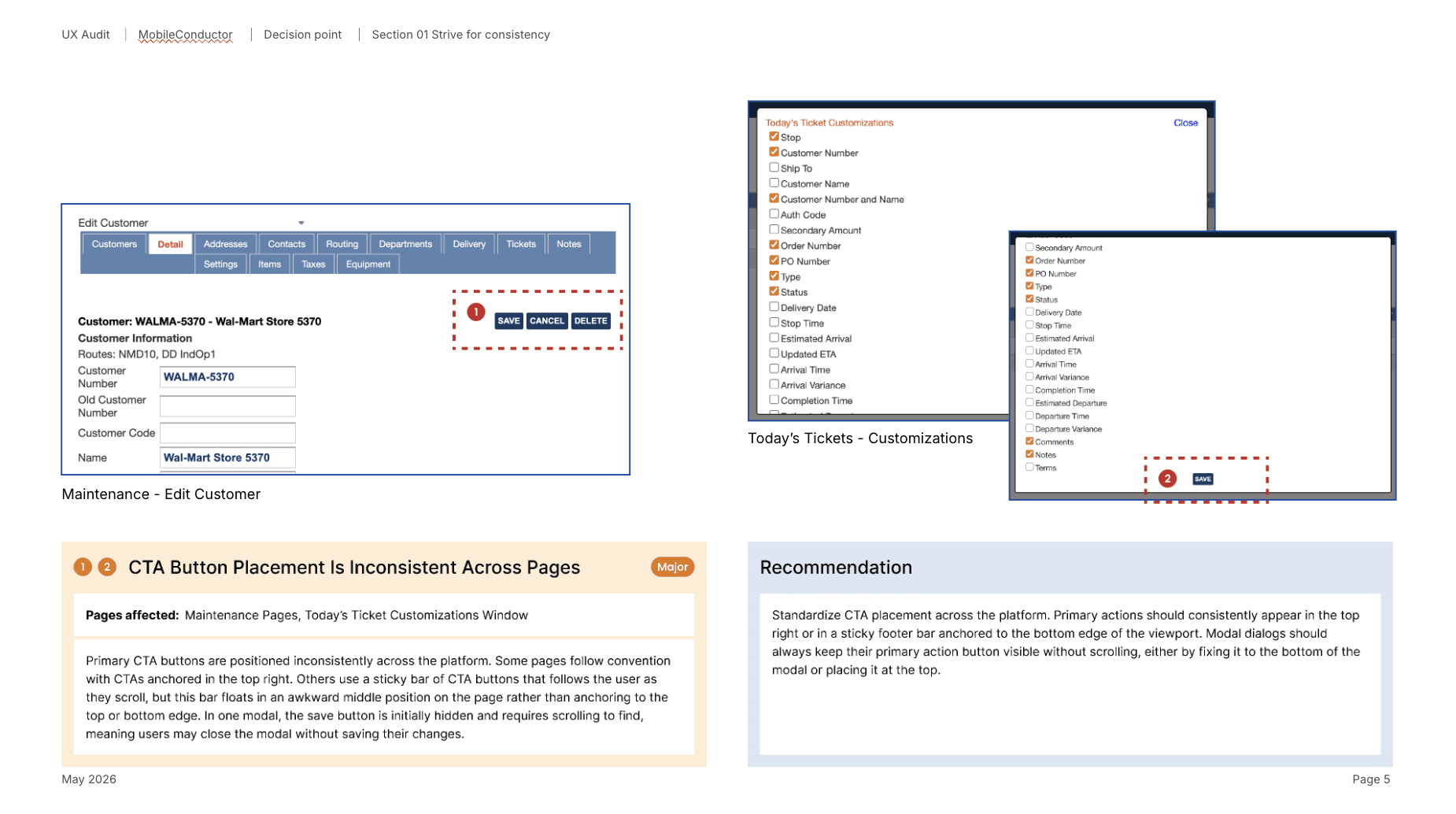
[02] Insights
Navigation is unconventional, requiring users to jump across multiple pages to complete a single task
Drivers need highly guided workflows with clear next-step visibility to reduce confusion during delivery tasks.
Key workflows are inefficient and require excessive manual effort (e.g. tedious reports, drilling down) to find information
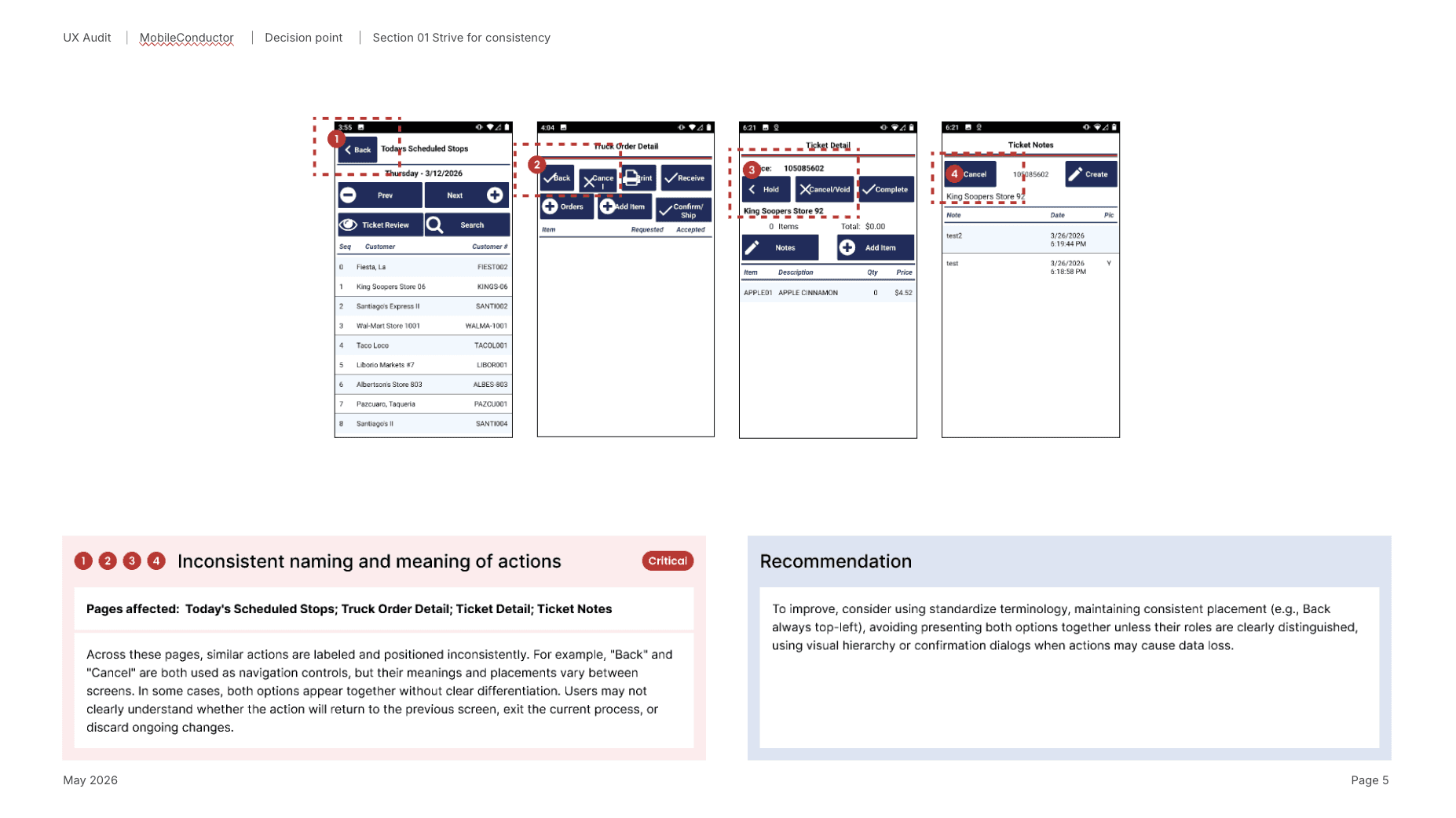
[03] Design Solution
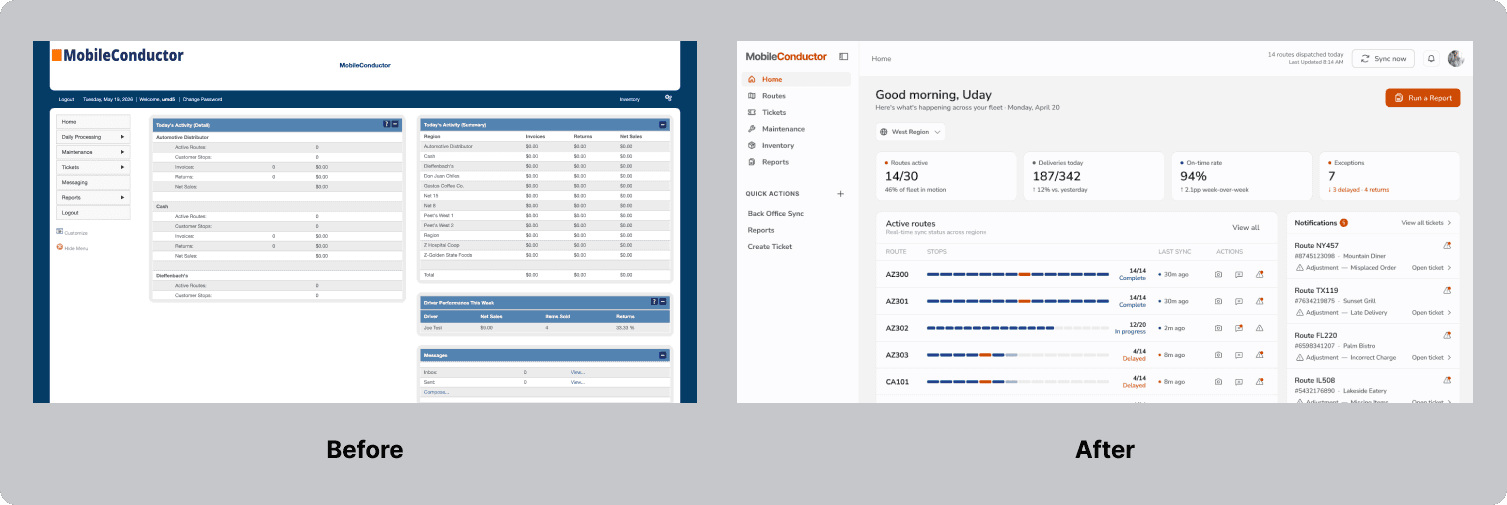
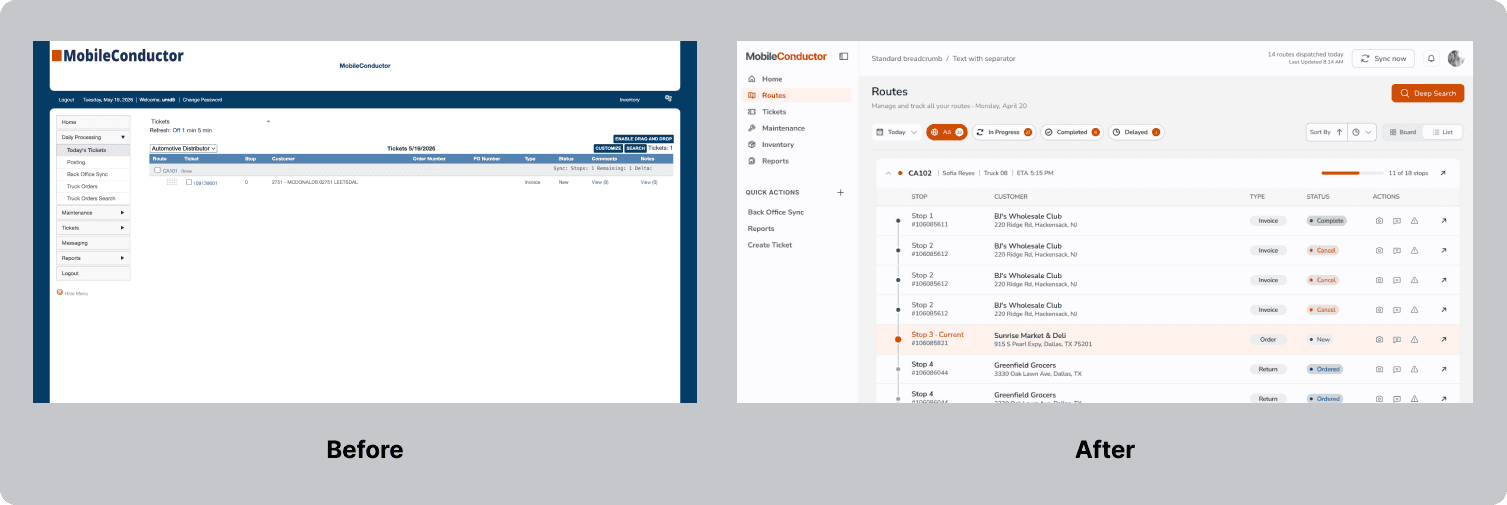
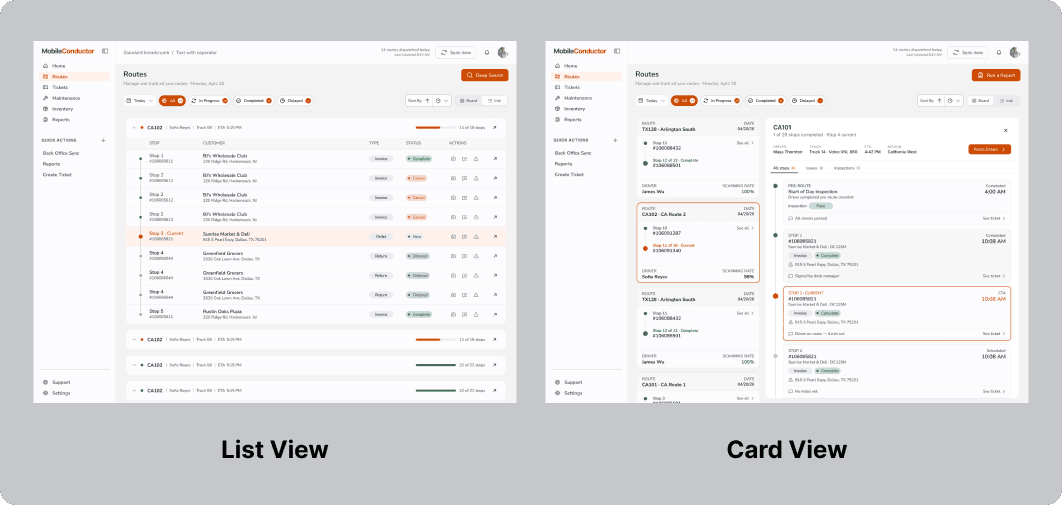
Surfacing key information on the web platform (alerts, notes, POD) significantly reduces the need to drill into multiple screens
Create workflows that minimize cognitive effort, scrolling, and unnecessary interactions during deliveries for drivers
Include visual route tracking on the web platform (stop-by-stop progress and issue indicators) enables users to quickly assess status and identify problems at a glance
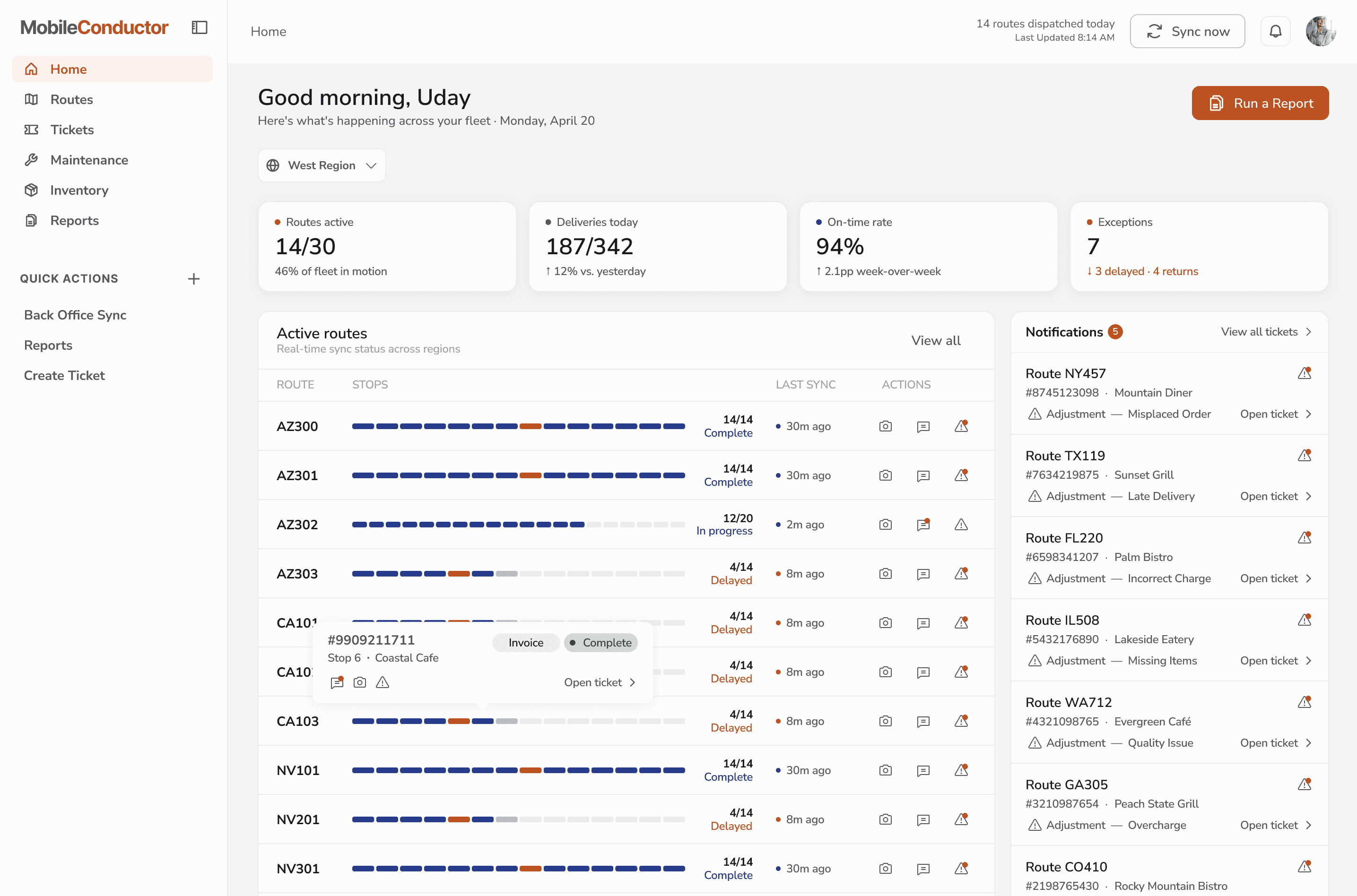
[04] Testing & Iteration
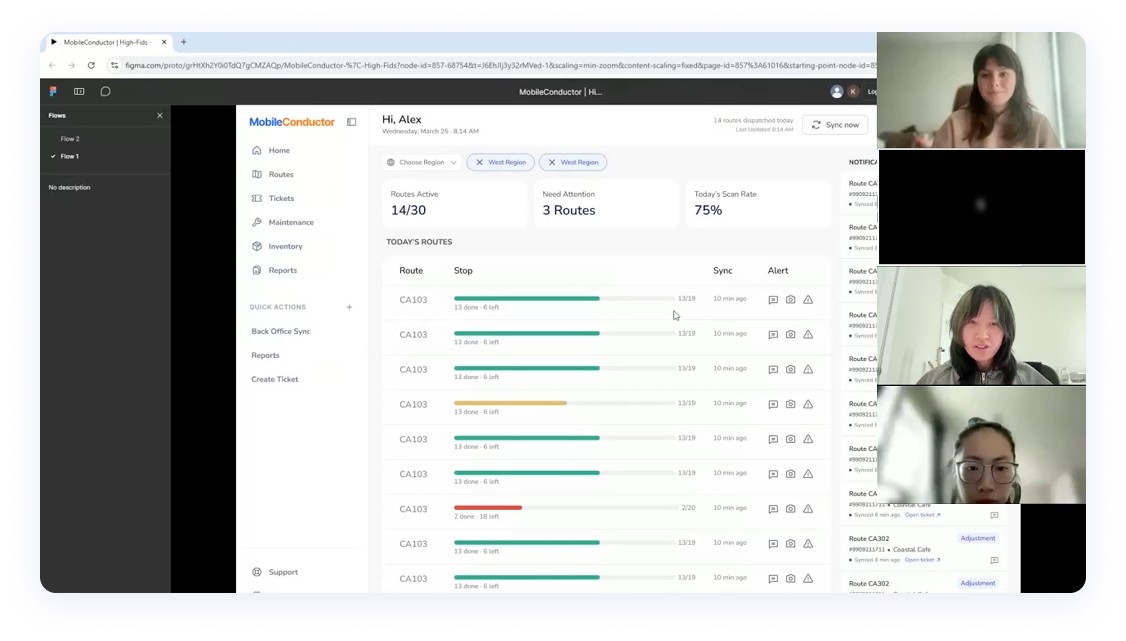
Conducted 2 rounds of usability tests with 4 users to validate redesign direction, and identify usability improvements in our designs
Gathered qualitative data through think-aloud walkthroughs and A/B comparisons across two rounds of usability testing to validate design decisions and surface usability improvements
Collected quantitative data using a Likert-based System Usability Scale to compare usability scores across the original platform, and two rounds of redesign iterations
[Outcome]
Delivered responsive mobile and desktop prototypes showcasing redesigned features and user flows — response was strong enough that stakeholders asked when the changes would ship
Developed a scalable design system and component library that gives developers a clear, consistent foundation for building and maintaining both platforms
Translated UX audit and research findings into actionable insights that bridge client business goals with real user needs across both platforms
[Key Learning]
Streamlined logic is just as important as customizable features
the real challenge was designing for both without one undermining the other
Good UX Is Good Business
Reducing driver errors and giving managers real-time visibility weren't just usability wins — they were directly tied to operational efficiency and client outcomes.
Leadership Means Holding the Team
Keeping a team aligned, accountable, and comfortable enough to do their best work is its own design challenge — and just as important as anything on the canvas