[Case 06]
Reduced task overwhelm by helping users break work into realistic, manageable steps
Productivity
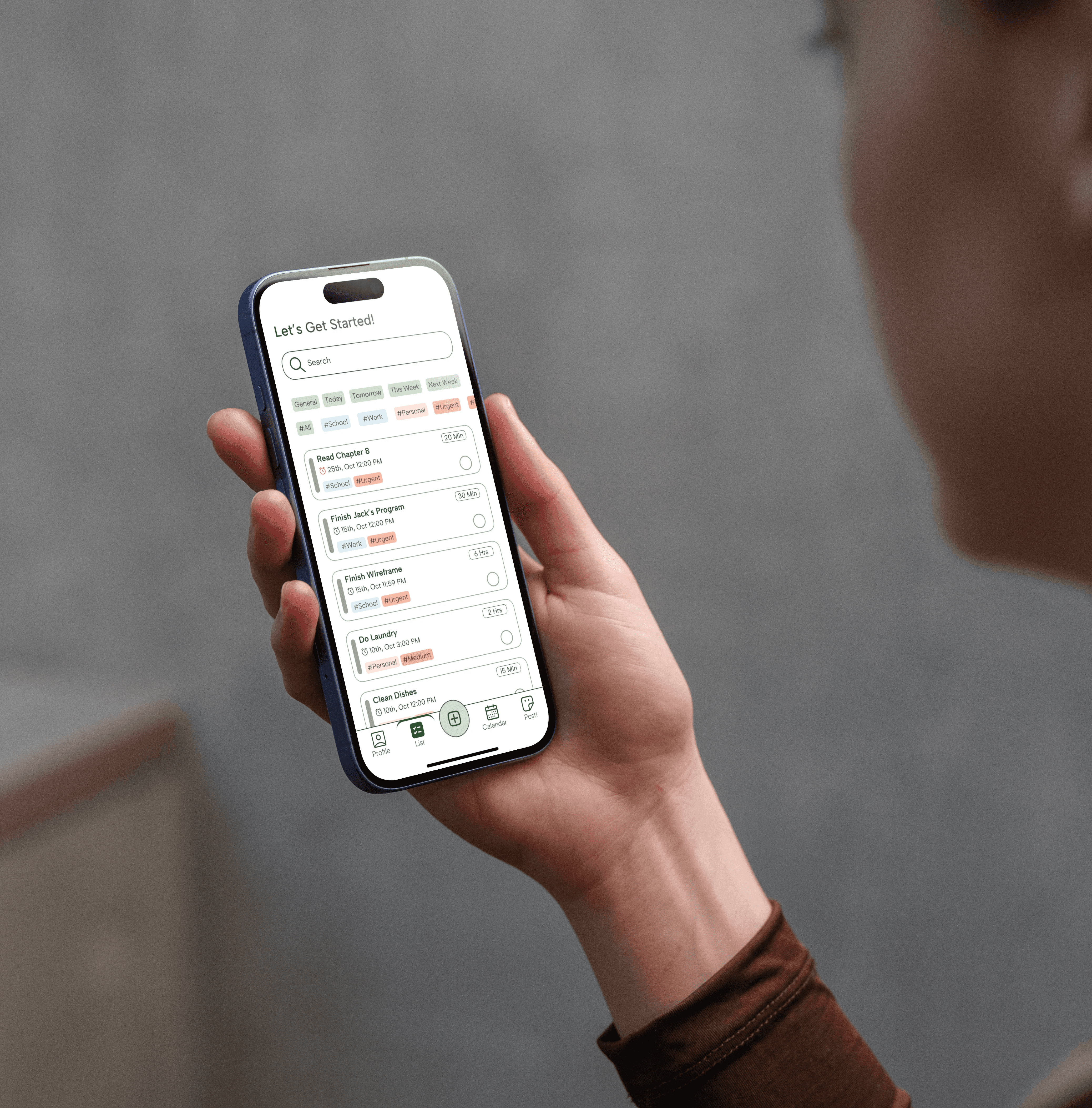
Posti
Your Personal Planning & Time Management System
[Project Overview]
Posti is a to-do list application that aims to help users (particularly neurodivergent users) organize tasks, improve time management, and reduce procrastination. With features such as AI help, time management tools, time predictions, task breakdown tools, and smart goal settings, Posti creates a collaborative and approachable environment for those overwhelmed by their to-do list.
[Problem Statement]
Neurodivergent users need more assistance managing tasks, remembering important information, and overcoming procrastination. The lack of assistance in current task management apps leads to a gap in productivity and user comfort. Current apps provide a good baseline for brain dumping and some organizing, but don’t take extra measures to help with productivity and time management
[Industry]
Productivity
[My Role]
UX/UI Designer, Project Manager
[Platforms]
Mobile
[Timeline]
Aug 2024 - Dec 2024
[Deliverables]
High Fidelity Prototype for Mobile
Design System & Documentation
UX Case Study Report
[Persona]

Marcus
Junior Marketing Coordinator
"I know what I need to do, I just need help breaking it down and knowing where to start.”
Age: 26
Location: Austin, TX
Tech Proficiency: Intermediate
Gender: Male
[Goal]
Reduce cognitive load by breaking complex tasks into structured, achievable steps
Develop a better sense of time to stay on track without feeling rushed or overwhelmed
Feel less overwhelmed by daily responsibilities through clearer planning and structure
[Frustrations]
Overwhelm at the beginning of tasks often leads to procrastination and delays.
Relies on external cues to remember tasks, leading to missed deadlines when reminders are insufficient
Struggles to prioritize tasks and decide what needs attention first.
[Process]
[01] User Research
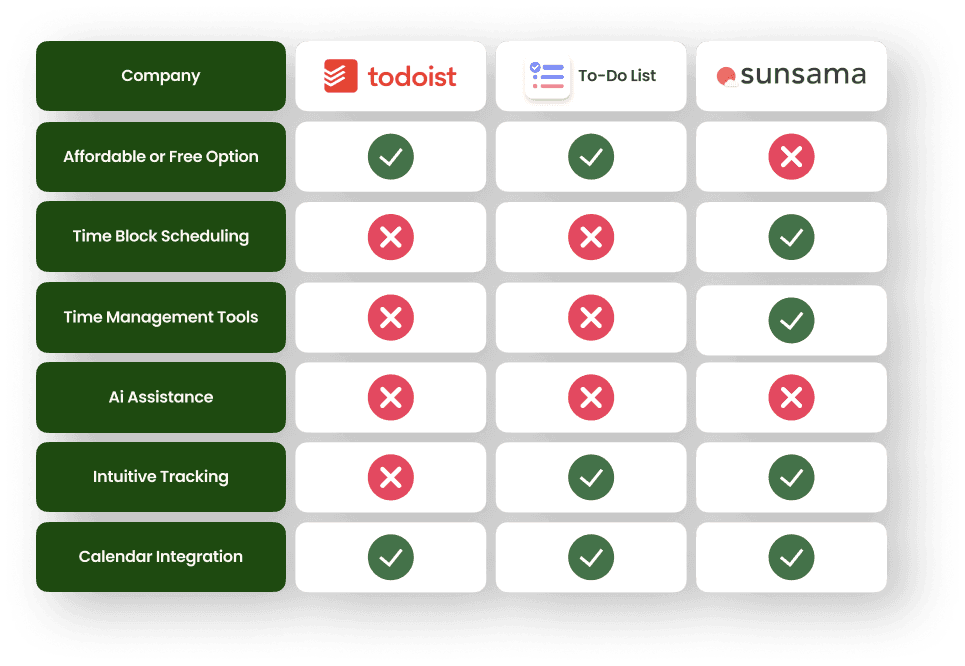
Conducted competitive analysis of existing productivity and to-do list apps to identify gaps in ADHD-friendly time management and task support
Analyzed how neurodivergent users interact with task management tools, focusing on procrastination, overwhelm, and time blindness
Studied information architecture patterns in current to-do list apps to understand where users experience friction and cognitive overload
[02] Insights
Existing to-do list apps support task entry but fail to actively assist users with prioritization and time estimation
Neurodivergent users need external structure and reminders to overcome procrastination and forgetfulness
Overly complex interfaces increase anxiety and overwhelm rather than improving productivity
[03 Design Solution]
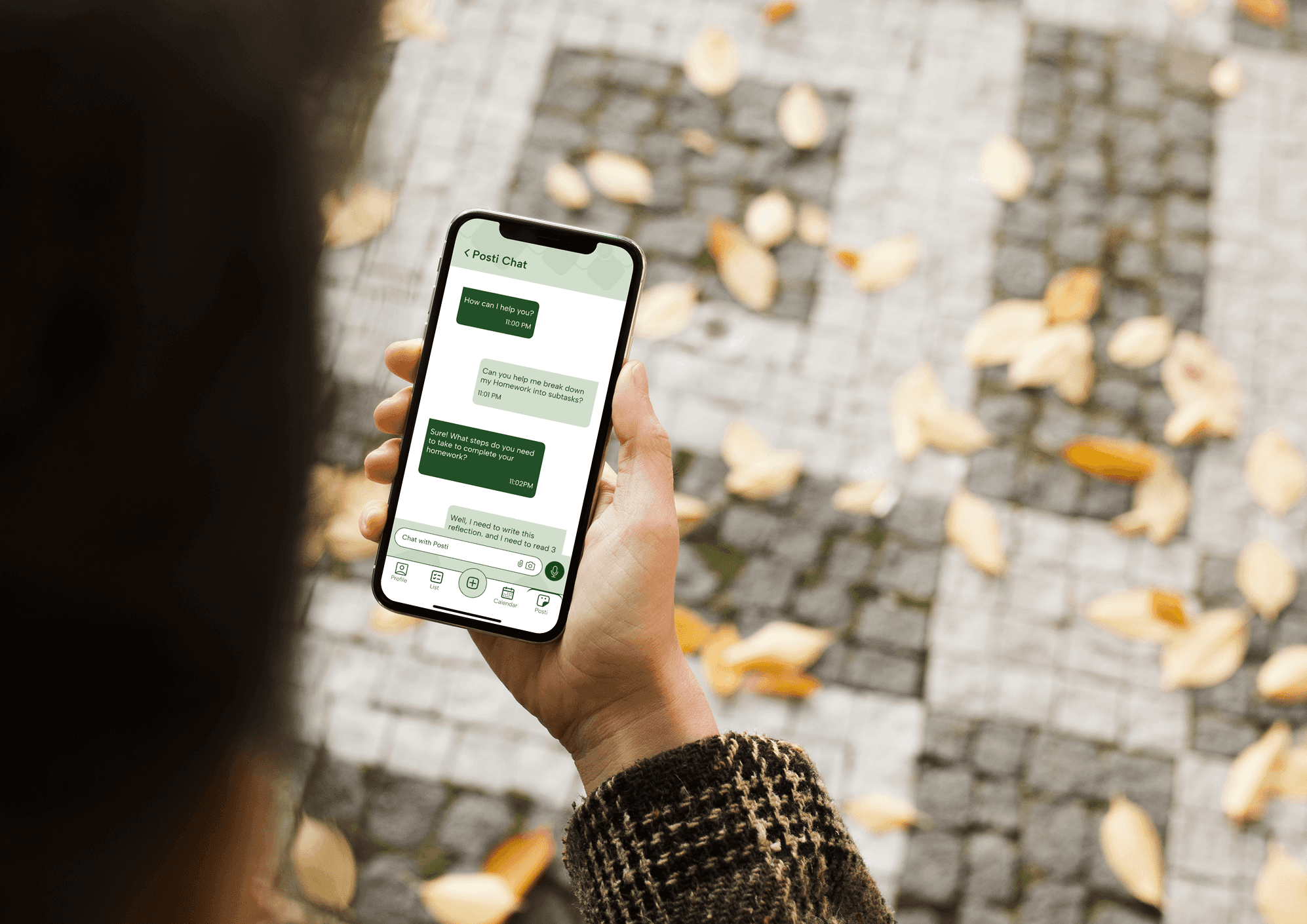
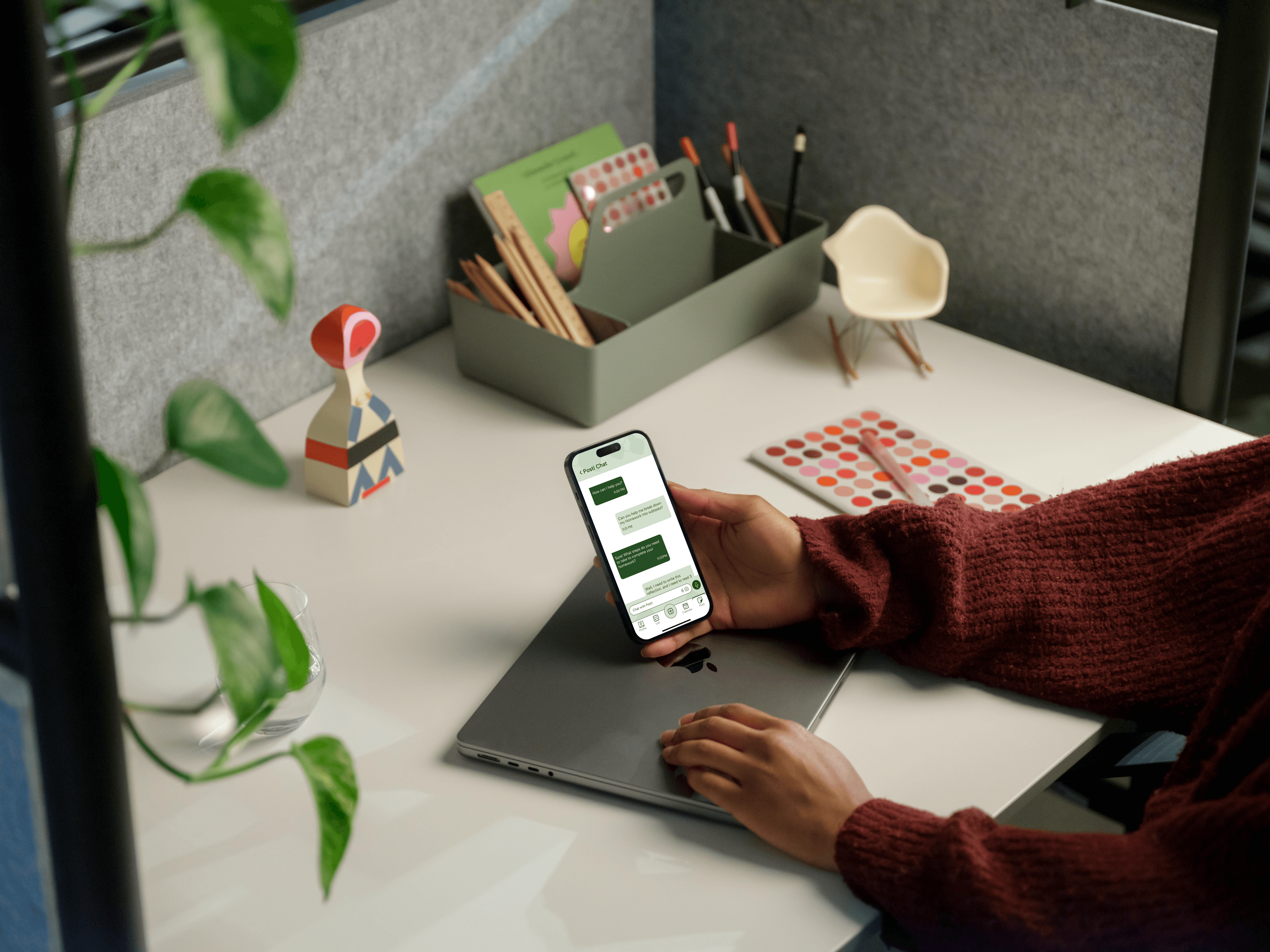
Designed AI-assisted task breakdown and time estimation features to help users start and complete tasks more easily
Implemented built-in time management tools such as Pomodoro timers and scheduling systems to support focus and planning
Created customizable task views, sorting options, and calendar integration to support different productivity styles
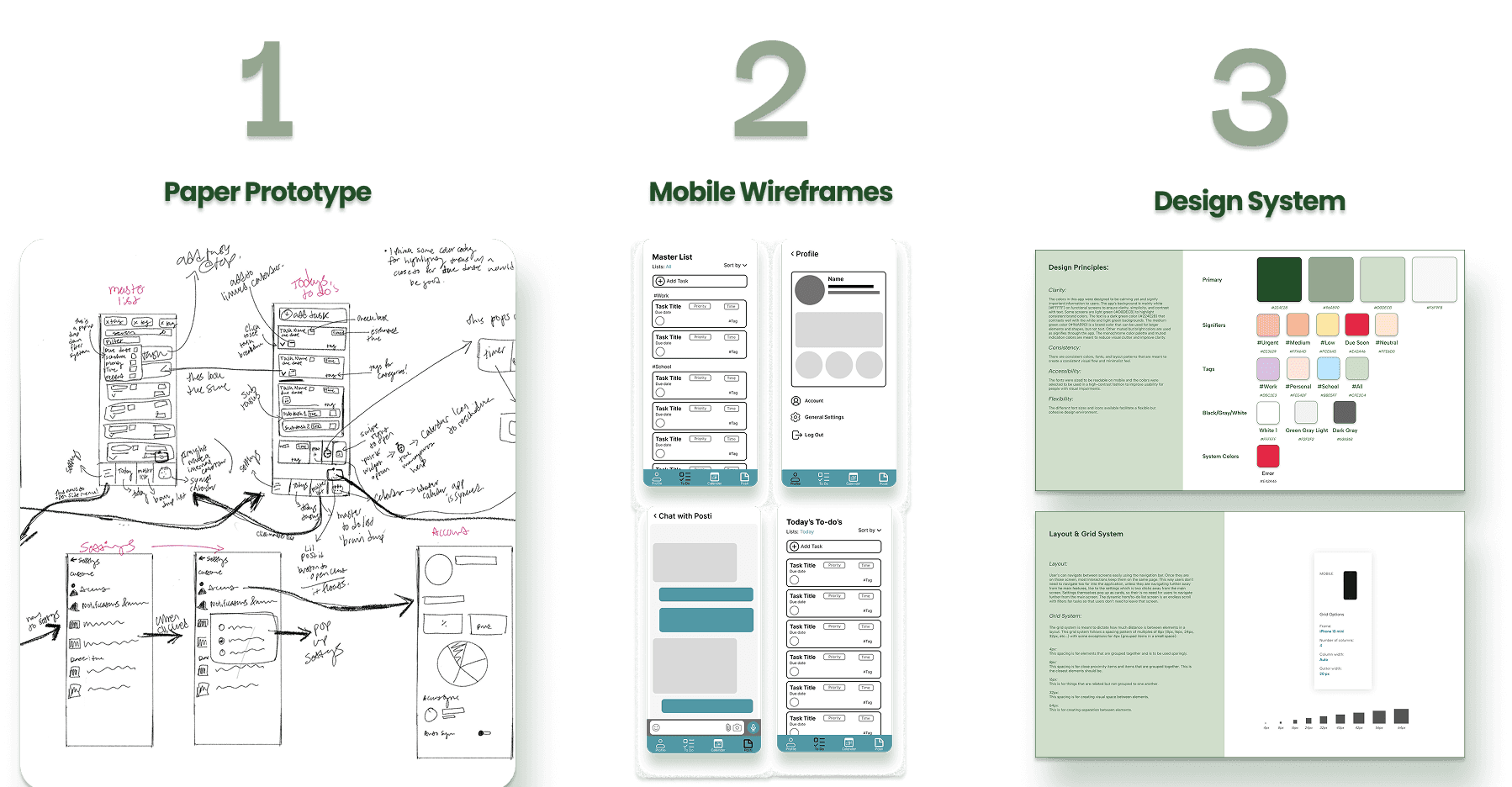
[04] Testing & Iteration
Conducted usability testing with students and young professionals aged 18–40, including neurodivergent participants
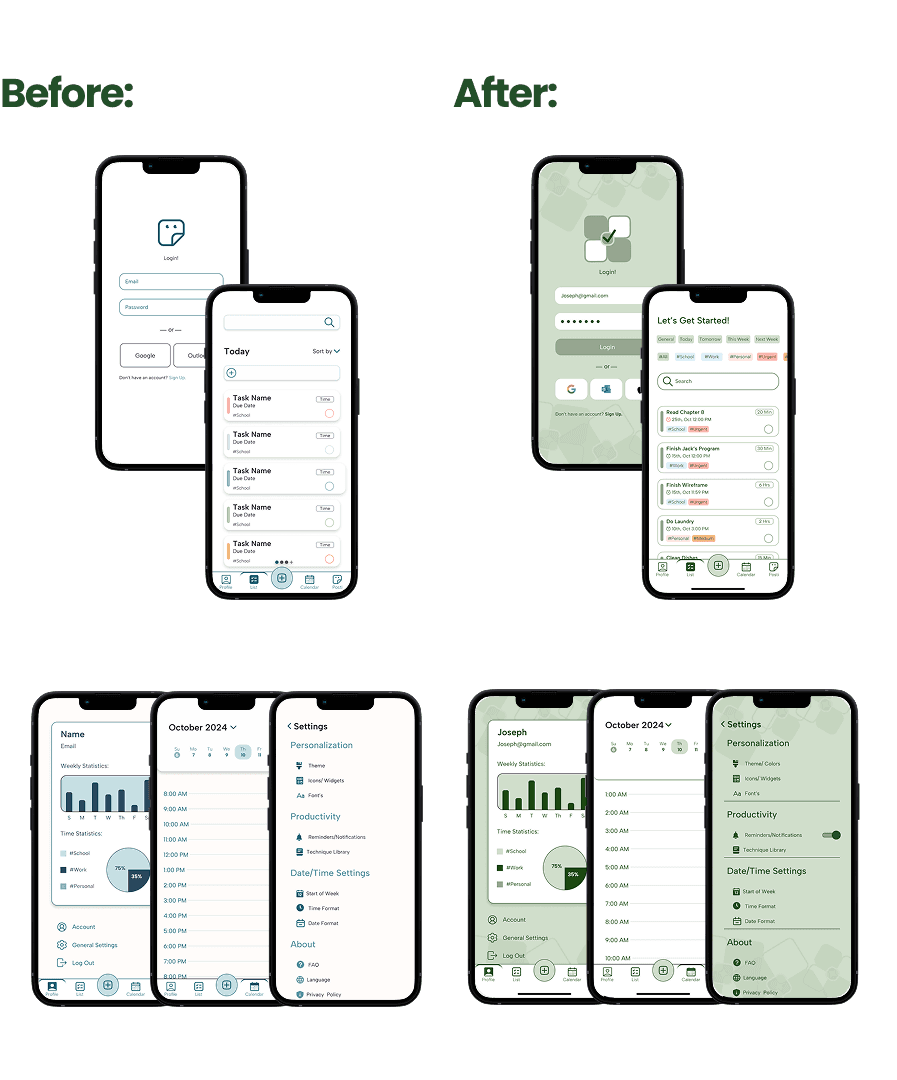
Identified usability issues including inconsistent icon sizing, unclear button labels, awkward search placement, and the need for more effective reminders.
Iterated on spacing, visual hierarchy, and color system to improve clarity and reduce cognitive load
[Outcome]
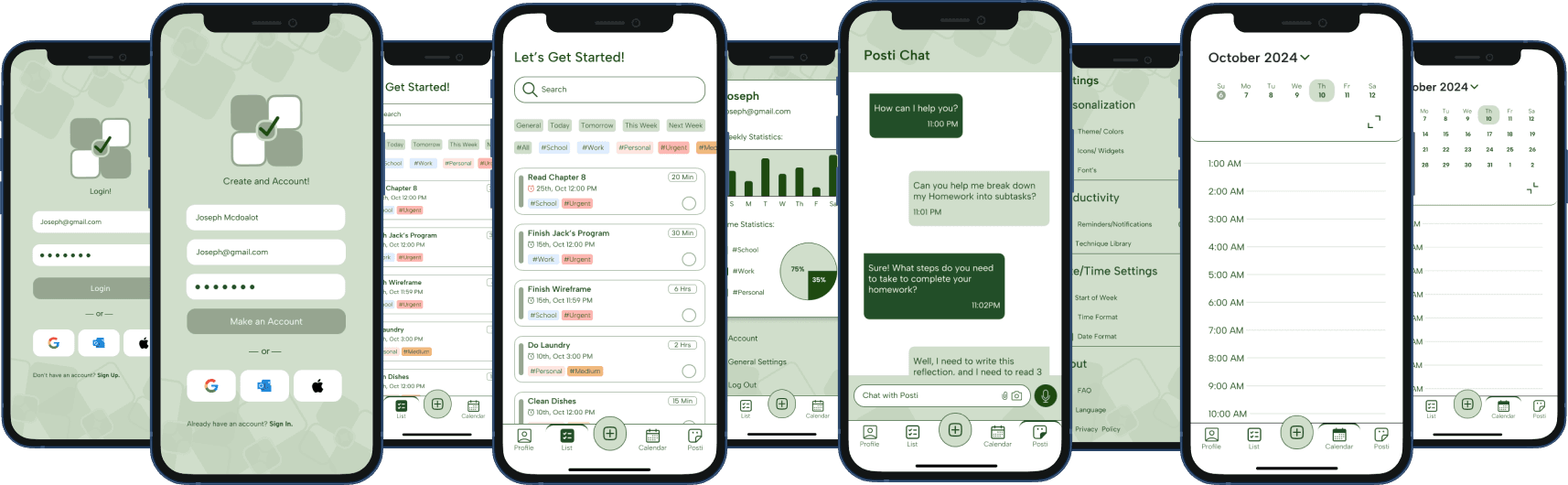
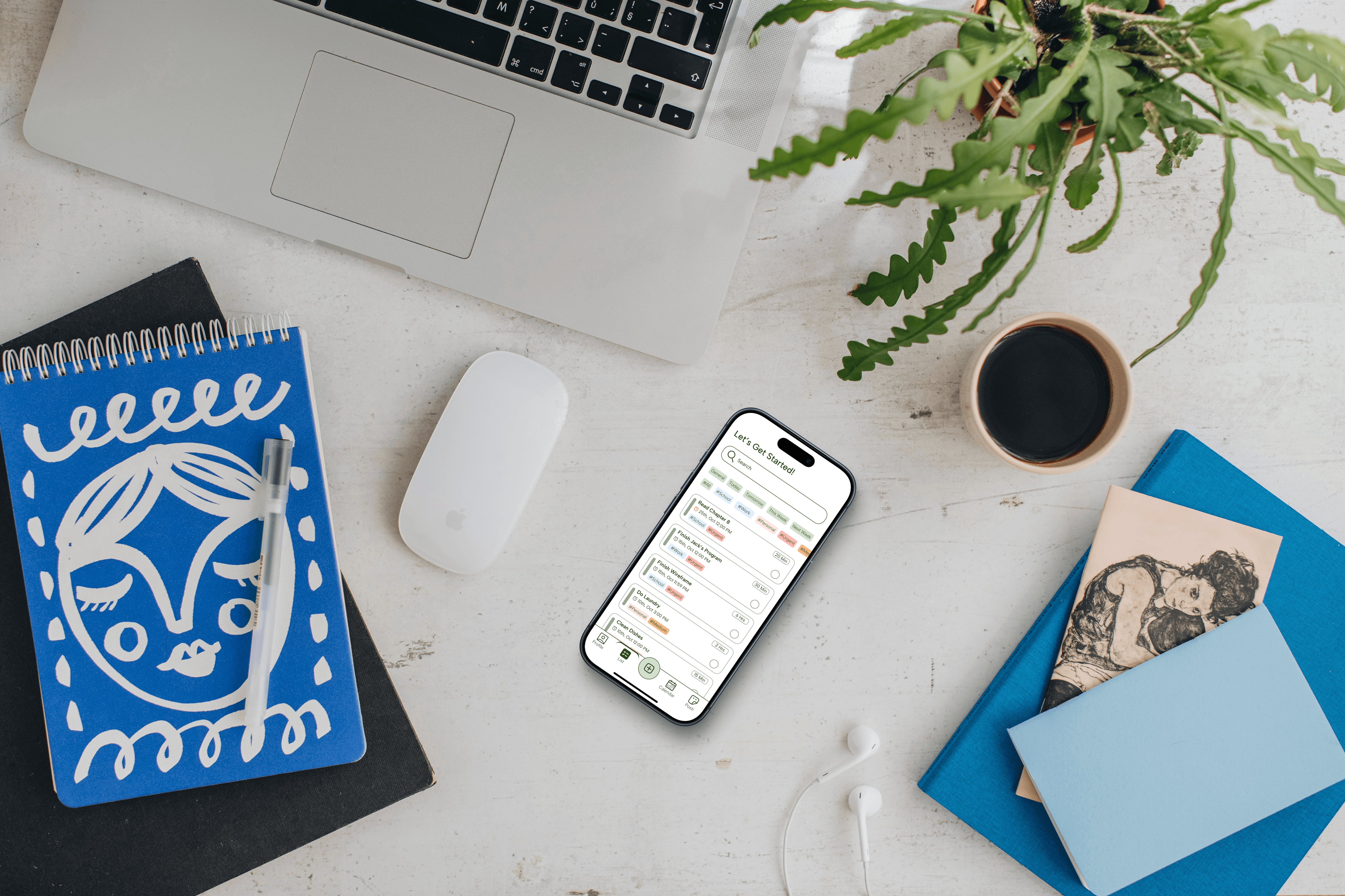
Delivered a high-fidelity mobile prototype focused on task clarity, time awareness, and reduced overwhelm
Introduced a sticky-note–style widget that stays visible on top of other apps, keeping important tasks front and center.
Created a productivity tool concept tailored to neurodivergent users’ needs while remaining intuitive for a broader audience
[Key Learnings]
Structure Enables Action
Users are more likely to complete tasks when structure is built into the experience.
Simplicity Reduces Overwhelm
Clear visual hierarchy and spacing directly impact user confidence.
Productivity Is Personal
Flexibility and customization are essential for supporting different working styles.